
Introduction
Imagine waking up to the aroma of freshly brewed coffee, your curtains opening automatically, and your favorite playlist starting to play — all before you even leave your bed. Sounds futuristic? Not anymore. With AI-powered smart homes, this is quickly becoming a reality across India.
Artificial Intelligence (AI) is not just transforming industries; it’s also reshaping how Indians live, manage, and secure their homes. The blend of AI and the Internet of Things (IoT) is paving the way for connected, energy-efficient, and intelligent homes that learn from your habits and preferences.
Understanding Smart Homes
A smart home is a living space equipped with connected devices that can be remotely monitored, controlled, and automated. From smart TVs to connected air conditioners, these systems work together to create a seamless, tech-driven living environment.
Key Technologies Behind Smart Homes
Smart homes rely on:
- AI (Artificial Intelligence) for automation and learning
- IoT (Internet of Things) for connectivity
- Cloud computing for data processing and storage
- Voice recognition and machine learning for personalized experiences
Role of Artificial Intelligence in Smart Homes
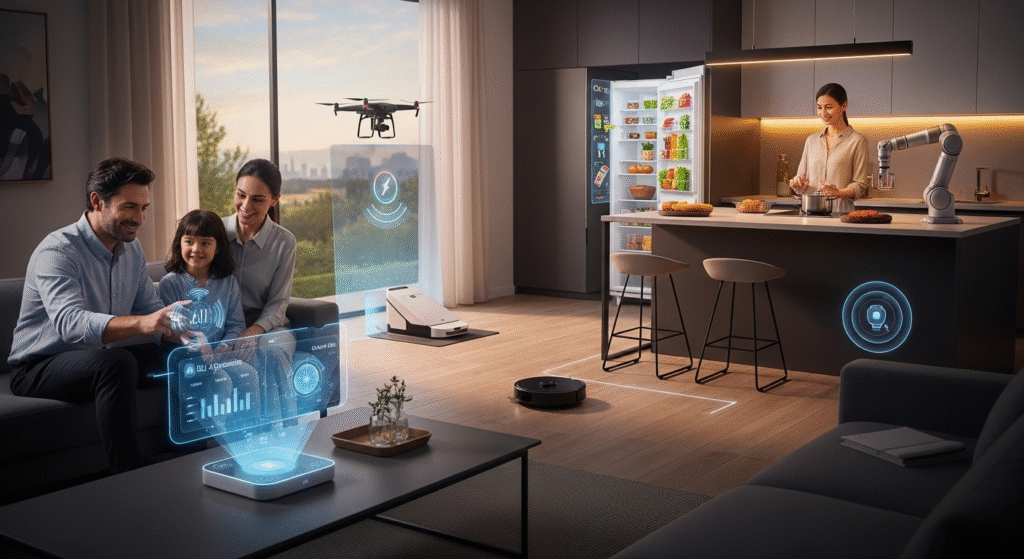
AI acts as the brain of a smart home. It enables devices to analyze user behavior, predict needs, and automate tasks intelligently.
For example, your AI-enabled thermostat can learn your temperature preferences and adjust itself without manual intervention. Similarly, AI can detect when you’re home and automatically turn lights or appliances on or off.
The Rise of Smart Homes in India
The smart home market in India is experiencing rapid growth, driven by increased internet penetration, the affordability of smartphones, and government-led digital initiatives. As more Indians adopt smart devices, the idea of a fully connected home is no longer a luxury—it’s becoming mainstream.
- Urban millennials are driving adoption.
- Startups and tech giants are investing heavily in AI integration.
- The Indian real estate sector is offering smart-ready homes.
Key Components of AI-Powered Smart Homes
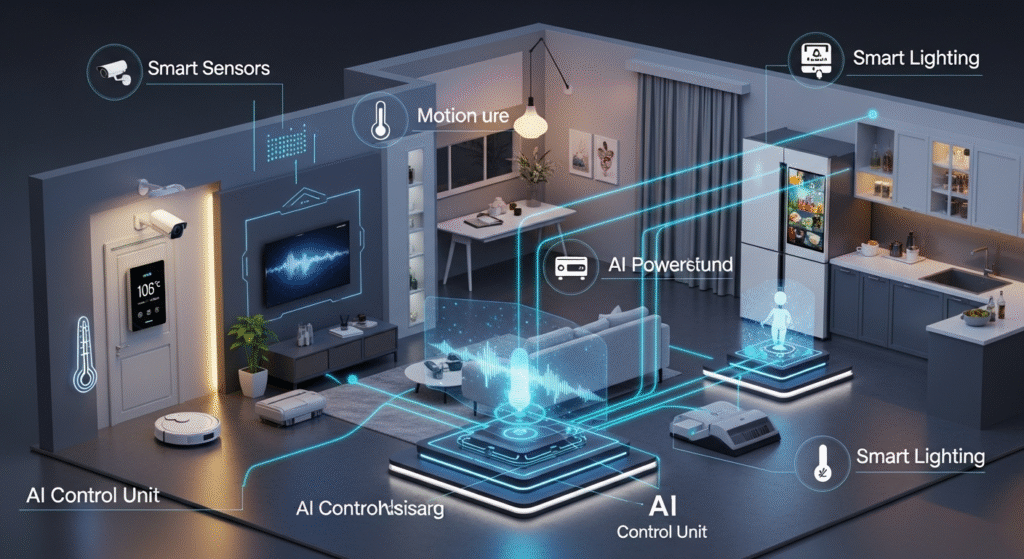
Smart Lighting and Energy Systems
AI-enabled lighting systems adjust their brightness based on natural light and occupancy, saving energy while creating a comfortable environment.
Intelligent Home Security
AI security systems utilize facial recognition, motion sensors, and real-time alerts to safeguard homes.
Smart Appliances and Voice Assistants
From refrigerators that track groceries to AI assistants like Alexa, Google Assistant, and Siri, smart homes are turning convenience into a lifestyle.
AI-Powered Energy Management
Energy efficiency is a significant benefit of AI in the home. AI systems can monitor electricity usage, predict peak times, and reduce waste.
Smart meters provide insights into energy patterns, while AI algorithms suggest ways to optimize consumption—making homes both cost-effective and environmentally friendly.
Home Security Enhanced by AI
Safety is one of the most appealing aspects of smart homes. AI takes it to another level with:
- Face and motion detection for identifying intruders
- Smart locks that can be controlled remotely
- Video analytics for monitoring unusual activity
These systems not only alert homeowners but can also directly contact emergency services in the event of a threat.
Voice Assistants and Virtual Helpers
AI voice assistants have become the digital companions of modern Indian homes. Whether it’s playing music, turning off lights, or ordering groceries, voice commands make life simpler.
Popular options include:
- Amazon Alexa
- Google Assistant
- Apple Siri
As AI understanding improves, these assistants are becoming more intuitive and capable of holding natural conversations in multiple Indian languages.
Smart Home Ecosystem in India
The Indian smart home ecosystem is buzzing with innovation.
Major players include:
- Tata Power EZ Home
- Schneider Electric
- Wipro Smart Home
- Philips Hue
- Xiaomi and Realme
Startups like Zunpulse and Hogar Controls are also making big waves by offering AI-based automation solutions at affordable prices.
Impact of 5G on Smart Home Expansion
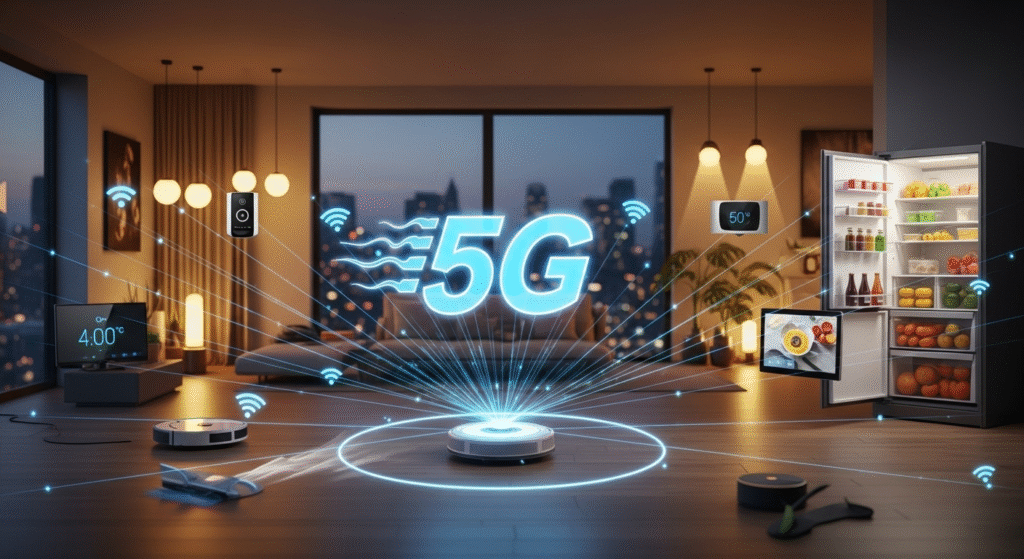
The arrival of 5G connectivity in India is a game-changer. With ultra-low latency and high-speed data, AI systems can respond in real-time, improving automation and synchronization between devices.
Challenges in Adopting Smart Home Technology
Despite the excitement, challenges remain:
- High installation costs for advanced systems
- Privacy concerns around data collection
- Interoperability issues among different brands
However, as competition intensifies and prices decline, adoption is expected to surge in the next few years.
Government Policies and Initiatives
Government programs, such as Digital India and the Smart City Mission, are creating a favorable environment for the adoption of innovative technologies.
Additionally, AI research funding and Make in India initiatives are empowering local innovation in smart home devices.
Future of Smart Homes in India
The next decade will see AI-integrated homes that communicate with electric vehicles, renewable energy grids, and even healthcare systems. Personalized living will become the norm—homes will predict needs, not just respond to commands.
How AI Is Making Indian Homes Greener
AI promotes sustainability by optimizing the use of resources. From innovative irrigation systems that save water to AI-controlled solar panels that maximize energy output, eco-friendly living is becoming smarter and simpler.
Conclusion
AI is redefining the concept of comfort, safety, and sustainability in Indian homes. As technology becomes more accessible and integrated, smart homes using AI are set to revolutionize everyday life in India—offering convenience, efficiency, and a glimpse into a brilliant future.
FAQs
1. What is a smart home in simple terms?
A smart home utilizes AI and IoT technology to automate tasks such as lighting, security, and energy usage, making life easier and more efficient.
2. How does AI make a home “smart”?
AI learns from user habits and controls devices automatically based on preferences and real-time data.
3. Are smart homes expensive to set up in India?
While advanced systems can be costly, affordable smart devices and DIY options are making it accessible to the middle class.
4. Is my data safe with smart home devices?
Most brands utilize encryption and security protocols; however, users should always change default passwords and update firmware regularly.
5. What is the future of smart homes in India?
With the advancements of 5G, IoT, and AI, India’s smart home market is expected to grow rapidly, making intelligent living a standard part of modern life.
