
When you scroll Instagram, you see a game ad almost every few swipes. One Reel shows a crazy puzzle level. Another Reel shows a PUBG clutch moment. You tap, visit the Play Store, and a new game sits in your phone.
Behind that one slight tap, there is a big budget, a whole marketing team, and a lot of data. In this article, you will see why gaming companies keep pumping money into Instagram ads and why this strategy still makes sense in 2025.
How big is gaming ad spend today
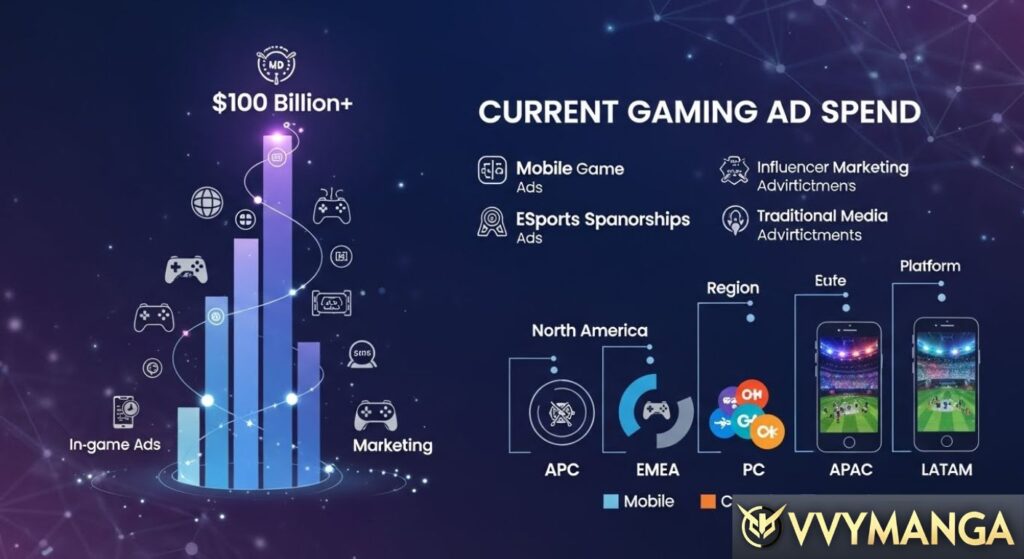
Mobile games are now a monster
You can start from a straightforward point. Mobile gaming is no longer a small niche. It is one of the most significant parts of the whole app industry.
A significant report on gaming apps showed that in 2023, gaming app install ad spend alone touched around 29 billion dollars worldwide. Match games and mid-core titles accounted for a large share of this spend.
Another analysis of mobile game marketing costs shows that total global mobile gaming advertising is moving from roughly 34 billion dollars in 2021 to around 50 billion dollars by 2025.
So when you see a game ad on Instagram, you’re not seeing a random thing. You see one tiny part of a vast worldwide ad machine.
Why paid user acquisition still matters
You now hear the term “user acquisition” in every gaming business talk. User acquisition is the process of acquiring new players for a game through ads and other methods.
Organic downloads come from word of mouth, Play Store search, YouTube videos, or creator shoutouts. These things are powerful, but they take time, and they are not always under your control.
Paid user acquisition on Instagram is different. You can turn on a campaign today and start getting installs the same day. This is important when a studio launches a new update, pushes a new season, or wants to quickly climb the top charts. CPI campaigns that focus on cost per install remain a standard strategy for entertainment and gaming apps.
That is why paid campaigns continue alongside organic growth.
Why Instagram is so strong for gaming ads
Gamers already live inside Reels and Stories
Meta’s own data for India shows one clear thing. Gamers often discover new titles on Meta platforms. Reels, video ads, and influencers play a significant role when players hear about a new game for the first time.
Another IPSOS study commissioned by Meta found that Reels is now the top short-video format in India in terms of daily viewing. That means if a gaming brand wants to reach Indian players where they spend most of their time on video, Reels becomes a natural place.
So gaming companies go where their players already scroll, like, share, and comment.
Visual formats match gameplay perfectly.
Instagram is a visual app. You see vertical videos, short cuts, memes, and quick slides.
For a game, this is perfect. In a five-second Reel, a studio can show:
- A crazy puzzle level and the final satisfying move
- A dangerous sniper shot in a battle royale game
- A “before and after” upgrade for a character or weapon
Short videos load quickly over mobile data and fill the screen. Because of this, a user can understand the core fun of a game without having to read any long text. When the creative is good, a single clip is enough to prompt the player to tap “Install”.
The money math behind Instagram ads
CPI for Instagram may be higher, but the quality of users matters
Ad spend only makes sense when numbers work. Marketers look at CPI for each platform.
Benchmarks show that a typical CPI on Instagram for app install campaigns usually falls between 1 and 5 dollars, depending on the country, niche, and creative. Some sources show that in gaming, Android installs tend to stay on the lower end, while iOS costs more.
This sounds expensive on paper. So why still spend on Instagram instead of only cheap sources
The reason is that many studios notice better player quality from Instagram. These players stay longer, complete more levels, watch more rewarded ads, or spend more on in-app purchases.
ROAS and LTV are the real heroes
In real life, a UA manager does not only see CPI. There are two more key numbers.
- LTV or lifetime value
- ROAS or return on ad spend
Meta’s own value-optimization studies show that value-optimized campaigns deliver ROAS 29% higher than that of typical install-focused campaigns.
So if a user from Instagram costs, say, 3 dollars but brings in 6 or 7 dollars over time through ads and purchases, the math still works. That is why companies continue to invest.
Video-focused formats drive strong results.
Reels and other video formats are now core parts of Meta’s platforms. Studies from Meta and partner agencies show that Reels ads deliver higher recall and stronger brand metrics than longer, skippable video formats.
For gaming, this is very important. When people remember a game after a single short ad, the chance of an install and later return visits increases. Companies see this in their dashboards, so they keep spending.
Targeting the power of Instagram for gaming brands
Precise audience building
Meta gives very sharp targeting tools. A gaming studio can send ads only to
- Age ranges that match their core audience
- Locations like tier one cities or tier two towns
- Interest groups such as “mobile gaming”, “puzzle games”, “cricket”, and “anime.”
- Device types and platforms
Older marketing blogs already explained that Facebook and Instagram share a single strong ad engine for optimizing CPI and other metrics.
On top of this, studios use lookalike audiences. They pick their best-paying users, ask Meta to find similar people, and then scale the campaigns. This cuts a lot of waste from the ad budget.
Optimization and AI do a lot of hidden work.
During Meta’s gaming events in India, the company highlighted AI ad tools as a significant factor for the growth of gaming brands.
These tools auto-test different creatives, placements, and audiences. The system then shifts the budget towards the combinations that deliver better ROAS or better long-term value. Ad ROAS features even optimize for ad revenue inside the game, not just for basic installs.
For a marketer, this kind of automation saves time and lets them confidently invest more money on Instagram without having to check every small setting by hand.
How in-game monetization supports big ad budgets
Where does the money come back from players
Once a player enters the game, money starts to flow in two main ways
- In-app purchases like skins, extra lives, passes, and chests
- In-app as rewarded videos, interstitials, and banner ads
Reports on mobile gaming show that in-app purchases and subscriptions together bring in more than 150 billion dollars a year across mobile apps, with gaming taking a considerable share.
On the ad side, newer benchmarks show that the ad revenue share between iOS and Android has shifted, with Android now taking a larger slice. For many casual games, ad revenue is the primary income, not purchases.
So a studio looks at total revenue per user and compares it to Instagram CPI. If the average value remains above the cost, scaling ad spend makes sense.
Rewarded formats and reward-focused users..
Many Ames now run on rewarded ads. Players watch a short video to earn coins, extra spins, or revives. They feel in control, so they accept ads more easily.
Ad ROAS products from Meta also look at this kind of ad revenue. They help studios bring users who watch more ads and give more value over time.
A funny side effect is that players who already enjoy rewards inside games stay open to other reward systems. So when such players see a Free play store redeem code app or a reward platform that gives Play Store codes, Amazon balance, or PayPal cards in exchange for tasks, they already understand the model. This not only helps the apps but also the games. As a user, you can get stuff via these codes in the game.
Why Indian gaming brands love Instagram even more
Young, mobile-first audience
India is home to a large number of young smartphone users. Data is cheap, screens are enormous, and free time is spent on short videos and games.
Meta’s India gaming insights show that gamers here respond very strongly to Reels, creator collaborations, and mobile-first ads.
For a local studio running a cricket game, a ludo game, or a casual puzzle title, Instagram is almost compulsory. Without help, creating for hours a day becomes a chore. MhelpI ad generr s helpsc.ators generate leads.
Reels is the top short video platform.
Recent studies show that Reels has become the top short-video format in India for daily viewing.
So when a gaming brand wants to showcase a new character, map, or event, they prefer a short vertical Reel over a long YouTube pre-roll. This matches user behaviour in India. Scroll, tap, instant fun.
Risks and limits of heavy Instagram ad spend
As more gaming companies pour money into Instagram and Reels, ad auctions get more crowded. This leads to higher CPIs and tighter margins. Benchmarks already show that install costs are rising in many top markets.
In such a market, only studios with strong data, constant creative testing, and good retention can continue to win. Smaller teams that copy creatives without proper tracking burn money quickly.
Too much dependence on paid traffic
There is one more problem. If a company depends only on paid UA, installs drop sharply when ad spend stops. Industry guides on UA always advise a mix of channels.
Brightt studios combine Instagram ads with
- App Store Optimization
- YouTube and streaming content
- Discord and community servers
- Cross-promotion between their own games
So Instagram is a strong engine, but not the only one.
What this means for you as a creator or app owner
You may run a gaming app, a reward app, or even a tech content brand. In all these cases, you can learn from big gaming companies.
You can start with small test campaigns on Instagram rather than large budgets. One ad set for Reels, one for Stories, one or two creatives each, and one clear objective like app installs or registrations.
Then you can
- Track CPI, retention, and ROAS properly
- Watch which creatives pull better installs and better in-app activity
- Build basic lookalike audiences from your best users
Step by step, you move from random boosts and “just promote” buttons to a more serious UA system.
If you ever plan an app that rewards users with coins, tasks, or gift cards, you can think exactly like a gaming studio. For every rupee you spend on Instagram, you check how much value comes back through ads, offers, and redemptions inside your app.
Final thoughts
Now you can see why gaming companies spend vast amounts on Instagram. The platform is targeting the right players, the ad formats match gameplay perfectly, and Meta’s tools help them reach users who stay and pay.
Next time you scroll through Reels and see a crazy level ad or a new cricket game promotion, you can look at it with a business eye. Behind that one short clip lies a long story of ad auctions, CPI tests, ROAS dashboards, and LTV curves.
Once you start thinking like this, every game ad in your feed turns into a free lesson in how modern gaming companies run their marketing.
